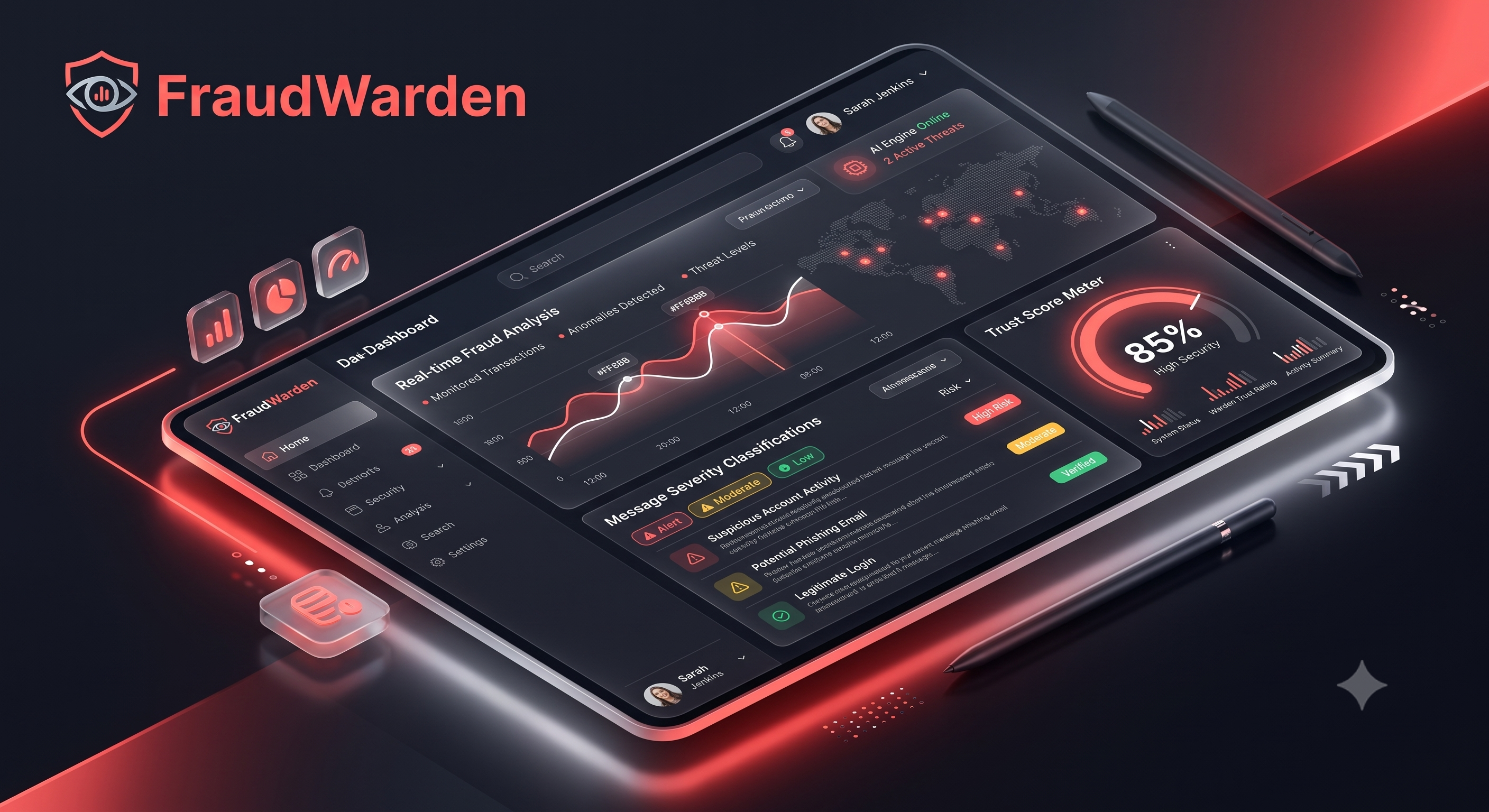
What this project brings together
The documented scope is a message-analysis flow: content enters through a dashboard, is assessed by a Flask-backed classifier, and is presented with a severity level.
Problem
Suspicious messages need to be assessed consistently instead of relying only on a reader to recognize fraud signals.
Implementation approach
The web app accepts message content, analyses its text, and classifies the message with a severity level. The documented architecture keeps the dashboard, Flask analysis route, text features and classifier in one service.
How the experience works
A step-by-step view of the product flow, using the features and components documented for this project.
- STEP 01Submit a messageThe visitor provides message text through the application dashboard.
- STEP 02Send it to the Flask serviceThe documented server boundary is a Flask application with an /analyze route.
- STEP 03Extract text featuresThe message is represented through text features before classification.
- STEP 04Classify severityThe classifier analyses the message and produces a severity level for the interface.
Architecture at a glance
This diagram summarizes the documented system boundaries. The walkthrough above explains the user and processing flow in more detail.
- ClientDashboard
- ServerFlask app/analyze route
- ModelText featuresClassifierSeverity scoring
Message text in, severity classification out. Single Flask service, no external calls.
Trade-offs & constraints
These are practical implications of the architecture described in the supplied project notes, not claims about a formal design review.
- A single Flask service keeps the request path straightforward. The web application and classifier are consequently deployed and scaled together.
Key features
- Real-time fraud detection
- Severity level classification
- User-friendly dashboard